
• Making Membranes in India for the World

Membrane Technology – Latest trends relevant to the Indianscenario for sustainable solutions

Membrane technology plays a crucial role in water purification, wastewater treatment, and improving industrial processes through effective separation and filtration. In India, the membrane manufacturing sector is limited, with most products imported from the USA, Europe, Japan, or South Korea. Vatsal Shah, Research Scientist, Vipul Organics, underscores the importance of innovation, government backing, and local production to enhance the influence of membrane technology. His emphasis is on sustainable solutions for securing water resources, promoting resource efficiency, and minimizing environmental impact across India.

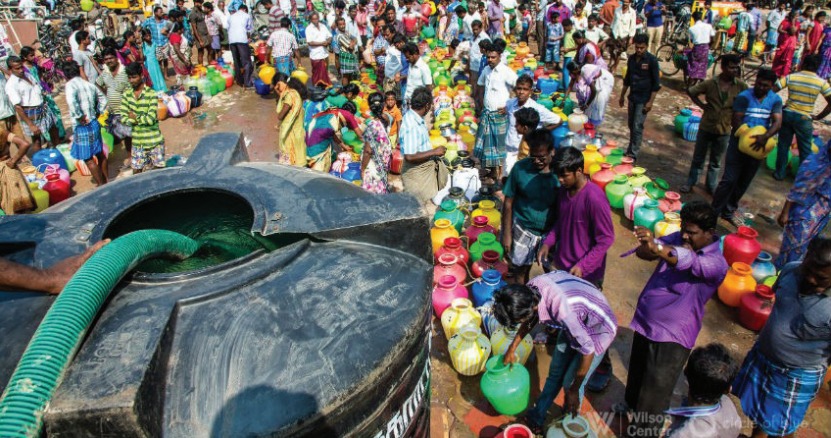
One of the most pressing issues of the 21st Century is the sustainable use of water. In India, about half billion people still lack access to safely managed drinking water. The problem is not just restricted to rural India, but also affluent cities like Bangalore and Chennai have faced record drought levels. These cities were very close to reaching “Day Zeros”, meaning that the city has run out of all its water and cannot cater to its needs. People need to queue in lines to claim their rations of the region’s most precious commodity- clean drinking water. Perhaps that is why it is suggested that water will be the oil of the 21st Century!

Given this challenge of drinking water scarcity that poses the India and world at large, effective water management has become extremely important and the role of membrane technology in dealing with the same shall be significant.

History of Membrane Filters

The first significant application  of  the m e m b r a n e – b a s e d separation was at the end of World War II when drinking water supplies had broken down around Europe and filters were needed to test for the safety of water. Although membranes were becoming popular, until the 1960s membrane industry was still in its infant stage, with limited application in laboratory setups or small specialised industrial separations. It was after the seminal discovery made by our Indian scientist Sourirajan in collaboration with his colleague Leob, to produce defect-free asymmetric reverse osmosis (RO) membranes that had permeation rates 10 times higher than any other membrane available at the time. Seawater desalination on a large commercial scale then became a reality. Today, membrane technology has become exceedingly mature and so many applications such as sterile filtration, haemodialysis, water purification, gas separation and many others are unimaginable without the use of membranes.


Understanding the Diverse Applications of Membrane Technology

Membrane technology involves the use of semi- permeable  membranes  to  selectively  separate components in a fluid mixture based on their size, shape, and chemical properties. This versatile technology finds applications in diverse sectors including water treatment, food and beverage processing, pharmaceuticals, and environmental protection. Membrane filtration is predominantly a pressure-driven process and depending on the type of application, membranes with specific pore size ranges need to be used. These are categorised into 4 main types listed below:

Microfiltration (MF): MF membranes have pore sizes in the range of 100-1000 nm. These membranes can filter out large suspended solids such as particulates, colloids, fat and bacteria. However, it allows viruses, proteins, polysaccharides and other relatively smaller molecules to permeate through. They play an important role in primary disinfection and clarification of the uptake water stream from the reservoirs, before entering UF units to produce potable water. Some other important applications include cold sterilization in the pharmaceutical and beverage industry, separation of casein from whey protein in the dairy industry and production of paints and adhesives. Many times MF membranes are used in pre-treating feed streams to block out larger molecules, before entering UF or RO systems.

Ultrafiltration (UF): UF membranes have pore sizes in the range of 2-100 nm. Unlike MF membranes, UF membranes are capable of retaining polysaccharides, proteins, viruses and other relatively larger molecules.
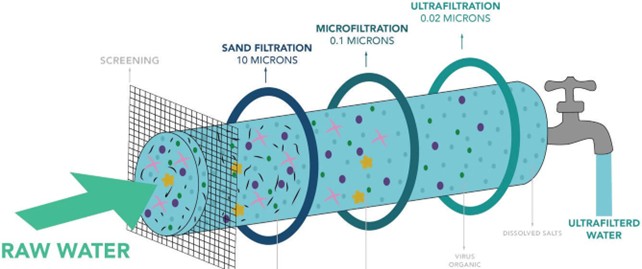
Raw water is typically ultrafiltered to make it potable.

They, however, allow sugars, amino acids, multivalent and monovalent ions and water to permeate through. UF plays an important role in the production of potable water. Along with MF membranes, UF membranes are also widely used in membrane bioreactors for wastewater treatment and is preferred over the conventional activated sludge systems because of several advantages such as consistent permeate quality, smaller footprint requirement, pathogen- free permeate, and most importantly no chemical disinfection requirement. UF is also widely used in the dairy industry for whey protein concentration, cheese production, and removal of pathogens from milk. UF membranes are also used to pre-treat feed streams entering RO systems, for example in the application of seawater desalination.

Nanofiltration (NF) : NF lies in a transition region between pure RO and pure UF with pore sizes in the range of 0.1-1 nm. It is sometimes referred to as loose RO or low-pressure RO. NF membranes are used for the removal of micropollutants and multivalent ions and have partial retention for univalent ions. Their applications include water softening, removal of heavy metals from wastewater, removal of pesticides from groundwater, and wastewater recycling in laundries.

Reverse osmosis (RO): RO membranes have pore sizes that are so small (less than 0.1 nm) that it filters out almost everything such as salts and metallic ions and only allows water to pass through. One of the most important applications of RO membranes is seawater desalination, which is very popular in areas with very limited surface and groundwater. Also, RO membranes are widely used around the globe in household drinking water purification systems to further improve the quality of water. RO systems are also used in industry to ensure that the water heated in the boiler to produce steam to heat various processes, is devoid of salts and minerals, as otherwise would lead to scaling or corrosion.

Indian Context

Today the global membrane market is estimated to be around 10 billion USD of which India constitutes less than 10%. The growth of membrane industry in India in the coming decade is going to be exponential across various sectors

Access to Safe Drinking Water: The cities are expanding and hence the municipal authorities must also expand their centralised water purification systems. Membranes can help them retrofit their existing systems to expand capacity without needing a larger footprint. As people are becoming more conscious of the quality of water they drink, the home water filter market is also grow quite rapidly. Even in rural areas, government must fund water purification systems to ensure safe drinking water reaches every household.

Industrial waste water treatment: Any chemical factory, must treat its wastewater before discharge. The conventional wastewater treatment systems consist of 3 stages of water treatment. Adoption of innovative membrane systems such as membrane bioreactor can considerably simplify the system and also help reduce the capital costs.

In India, for the establishment of any new chemical factory, environmental clearance (EC) must be sought. Most often, the EC mandates a ZLD (Zero Liquid Discharge) system to be implemented meaning, that factory is not permitted to discharge any effluent outside its premise and that it must recover and recycle all of its wastewater. ZLD systems are certainly an added costs for the industries but membrane based recovery systems can play a very important role in bringing these costs down. Appropriate process design and membrane selection by a membrane expert is essential.

Domestic waste water treatment: The wastewater generated by cities must be treated before discharge. Here again membranes can help reduce the footprint area requirement compared to conventional activated sludge systems. Use of UF and RO can in fact also allow a majority of this water to be recycled and reused.

Growth of Pharma and Biopharma industries: The growth of pharma and biopharma industries in India has been phenomenal and is still expected to double its size in the next 5 years. Both these industries rely on quality membranes for its filtration needs such as sterilisation, organic solvent separations, fermentation and cell cultures.

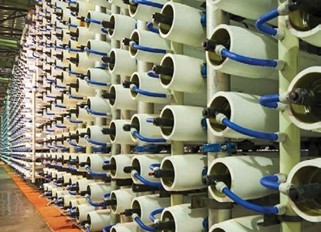
Membranes used in industry on a large scale

Challenges and Opportunities

Government policy implementation: Policy frameworks incentivize investments in advanced membrane systems, driving innovation and market expansion. While water recovery and reuse is a costly affair, strict government enforcement and mandatory water treatment systems will push the adoption of membrane based separation systems. Mandatory implementation of ZLD systems is certainly a step in the right direction.

Push for Make-in-India: There are only a handful of companies that manufacture membranes in India. Most of these membranes are imported either from the USA, Europe, Japan or South Korea. The costs of these membranes can be quite high and hence an impediment to its adoption. Local manufacturing will not only bring these costs down but also foster tailor-made solutions for Indian industrial needs.

Replacement and Energy costs: Membranes undergo fouling over time, where the filtration performance of the membrane deteriorates over time. Fouled membranes must be replaced every few months or years depending on its application. Moreover some RO-systems require very high pressures for its filtration which require very high energy input. Collaborative research partnerships between academia, industry, and government institutions shall accelerate innovation cycles and foster technological advancements in improving the efficiency of the membranes and reduce its fouling tendency.

Recycling Membranes: As mentioned before, fouled membranes mustbe replaced with new ones periodically. This has led to a new problem of membrane disposal.

Since majority of these filtration membranes are made from a polymeric material, they are non-biodegradable. Research is now being promoted to repurpose the old RO membranes that have completed its life cycle for UF or MF applications.


Conclusion

Membrane technology stands as a catalyst in India’s drive towards sustainable industrial progress. By embracing innovations in materials science, digitalization, and eco- friendly technologies, Indian industries can optimize resource use, minimize environmental footprint, and bolster global competitiveness. Continued evolution of membrane technologies is set to play a pivotal role across diverse sectors, shaping a resilient and sustainable future for India.


Author

Vatsal Shah
Research Scientist Vipul Organics