

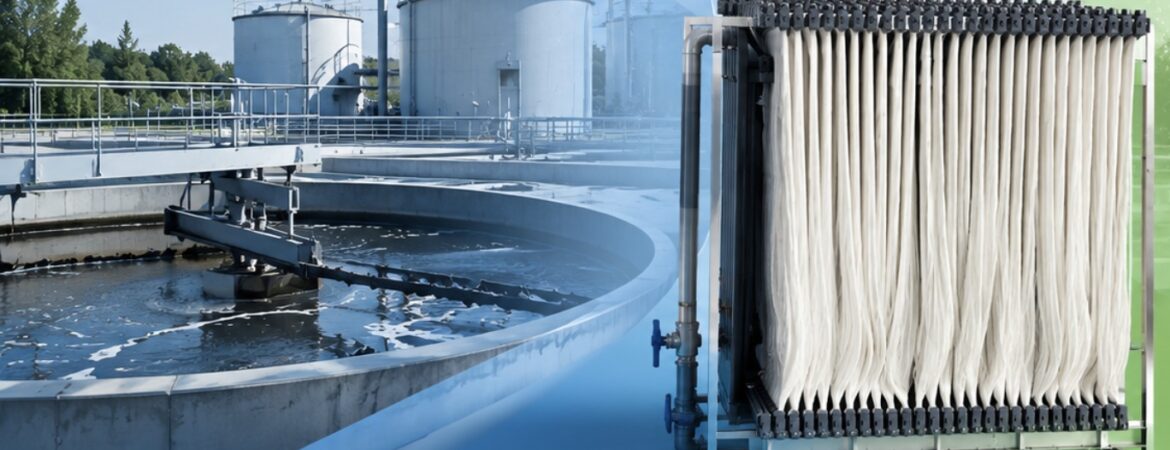
MBR vs Conventional Filtration Systems: What Should You Choose?
Water treatment decisions are rarely straightforward. And when it comes to choosing between a membrane bioreactor and a conventional filtration system, the stakes are high operationally, financially, and from a compliance standpoint. At Adimem Technologies, we’ve seen industries make this choice under pressure, often without a clear understanding of what each system genuinely demands. This piece is an attempt to cut through the noise and lay out what actually matters.
Understanding the Basics
A conventional filtration system typically combining primary settling, biological treatment, and secondary clarification has been the backbone of wastewater treatment for decades. It’s familiar, widely understood, and supported by a large pool of operational knowledge. The process relies on gravity settling and biological degradation to reduce organic load before the treated water is discharged or reused.
A membrane bioreactor (MBR), by contrast, integrates biological treatment with membrane filtration in a single process. Instead of relying on a clarifier to separate solids from treated water, MBR systems use ultrafiltration or microfiltration membranes to do that job producing effluent of significantly higher quality in a much smaller footprint.
Where Conventional Systems Still Hold Ground
It would be a mistake to dismiss conventional filtration outright. For large-scale municipal treatment plants with stable, predictable influent characteristics, conventional systems remain cost-effective and operationally manageable. Capital costs are lower, and the technology is well within the comfort zone of most plant operators.
Where conventional systems struggle is with tightening effluent discharge norms, space constraints, and variable influent quality. Secondary clarifiers require considerable land area. Sludge management is complex. And when discharge standards demand low TSS, BOD, or pathogen counts, conventional systems often need additional tertiary treatment stages to comply — adding cost and complexity.
The Case for MBR
MBR systems produce consistently high-quality effluent often suitable for direct reuse without additional polishing. The membrane barrier physically removes suspended solids, bacteria, and a significant portion of pathogens, making MBR output reliably cleaner than what conventional clarification alone can achieve.
The compact design is another genuine advantage. MBR systems require considerably less space than conventional equivalents, making them particularly relevant for urban industrial facilities, hotels, hospitals, and any setting where land is limited or expensive.
Higher mixed liquor suspended solids (MLSS) concentrations within the bioreactor also mean better organic degradation the biological treatment component of an MBR is inherently more efficient than in a conventional setup.
Adimem Technologies has designed and supplied MBR systems across sectors including pharmaceuticals, food processing, and textile and dyeing — applications where effluent quality and space efficiency are non-negotiable priorities.
The Trade-Offs You Need to Understand
MBR is not without its challenges. Membrane fouling is the most significant operational concern. Without disciplined maintenance regular cleaning cycles, controlled flux rates, and careful management of feed water characteristics — membrane performance deteriorates and replacement costs climb. This demands a higher level of operator attention compared to conventional systems.
Energy consumption is also higher in MBR. The aeration required to maintain membrane performance and support biological activity adds to operational expenditure. For facilities with tight energy budgets or inconsistent power supply, this is a real consideration.
Capital investment for MBR is higher upfront. The membranes themselves represent a significant cost, and replacement over the system’s life must be factored into the total cost of ownership calculation.
So, What Should You Choose?
The answer lies in your specific situation. If land is available, influent is stable, and discharge standards are moderate a well-designed conventional system may serve you well. If space is limited, reuse quality is required, or regulations are tightening MBR is worth the investment.
The key is a true assessment of your influent characteristics, output requirements, available footprint and long-term operational capacity. A detailed feasibility study is a requirement before you decide on one of the two technologies, suggests Adimem Technologies. The right system is the one that is built around your real constraints, not a generic preference.