• Making Membranes in India for the World
Awesome Image
CETP

Overview

Field-Engineered CETP Systems for Industrial Clusters

Adimem offers robust Common Effluent Treatment Plant (CETP) solutions tailored for multi-industry clusters where effluent characteristics vary significantly. Our systems are engineered to ensure regulatory compliance, modular scalability, and operational ease. We integrate membrane-based filtration with conventional treatment to achieve high pollutant removal across dyes, chemicals, textiles, and other sectors sharing a CETP.

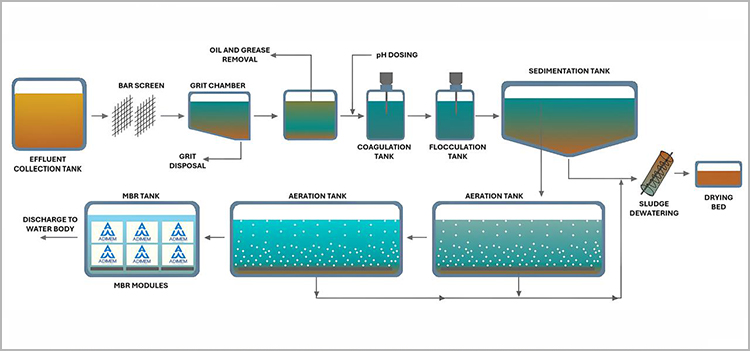
  • Typical Process Flow:

    Collection → Equalization → Coagulation/Flocculation → Primary Clarification → Biological Treatment → MBR → Polishing → UF/RO → Discharge or Reuse

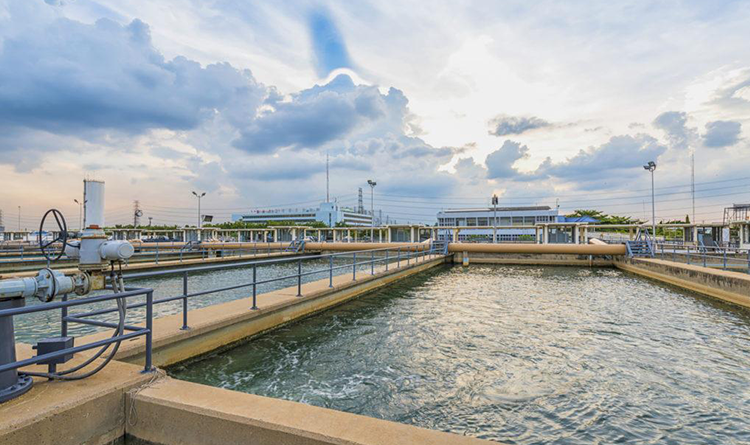
cetp-wtp

Key Features

  • Designed to treat highly variable effluent profiles
  • Modular architecture with centralized control and distributed automation
  • ARISE-MBR, FLUXA-UF and FLUXA-RO membranes designed for high fouling resistance and extended cleaning intervals
  • SCADA-integrated with remote analytics and performance reporting


FAQ's

What is a Common Effluent Treatment Plant (CETP) and how does it work?

A Common Effluent Treatment Plant (CETP) is a centralized facility designed to treat industrial wastewater from multiple units within an industrial cluster. It works through a multi-stage process that includes collection, equalization, coagulation, biological treatment, membrane filtration (MBR, UF, RO), and final polishing. This integrated approach ensures effective removal of pollutants, dyes, chemicals, and organic matter, making the treated water suitable for discharge or reuse.

CETPs offer several advantages, including cost-effective wastewater treatment, shared infrastructure, and regulatory compliance for multiple industries. They help reduce individual investment in treatment plants while ensuring consistent pollutant removal and environmental protection. CETPs also support water reuse, reduced discharge, and sustainable industrial operations, especially in sectors like textiles, chemicals, and dyes.

Modern CETP systems combine conventional treatment processes (such as coagulation, flocculation, and biological treatment) with advanced membrane technologies. These include Membrane Bioreactors (MBR) for biological treatment, Ultrafiltration (UF) for fine particle removal, and Reverse Osmosis (RO) for high-level purification and water reuse. This hybrid approach ensures high efficiency, better water quality, and compliance with stringent discharge standards.

Choosing a trusted CETP solution provider in India ensures access to custom-engineered, scalable, and high-performance wastewater treatment systems. Reliable providers offer end-to-end solutions including design, installation, automation (SCADA integration), and regulatory support. They also provide in-house membrane technology, pilot testing, and lifecycle services, ensuring efficient operation, reduced downtime, and long-term compliance with environmental norms.