
Applications of Nanofiltration in Textile & Dye Industry
Textile and dyeing units generate some of the most difficult effluent streams in manufacturing a mix of dyes, salts, surfactants, and process chemicals that resist conventional treatment. As compliance norms tighten and water costs rise, mills are turning to membrane-based solutions to recover water, reclaim dyes, and cut discharge volumes. Adimem Technology is at the forefront of this shift, offering nanofiltration (NF) systems built specifically for the high-TDS, high-colour loads typical of textile wastewater.
Why Nanofiltration Fits the Textile Process
Nanofiltration sits between ultrafiltration and reverse osmosis in terms of pore size, which makes it uniquely suited to textile effluent. NF membranes reject large dye molecules and multivalent salts while allowing smaller monovalent ions to pass through. This selective separation is exactly what textile wastewater needs — most dye baths contain a mix of colour bodies and salt (often sodium chloride or sodium sulphate), and separating the two is central to any water-reuse strategy. Where reverse osmosis would reject everything, including the salt, NF allows mills to recover both clean water and a reusable salt stream, improving the economics of the whole operation.
Key Applications in Textile & Dye Processing
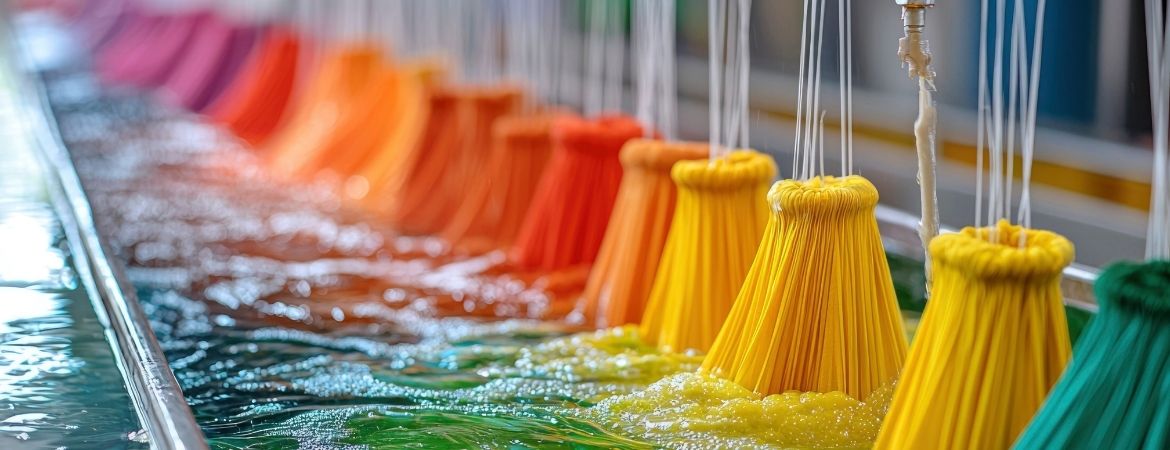
Dye Bath Recycling Reactive and disperse dye baths carry unfixed dye along with salt after each dyeing cycle. Nanofiltration concentrates the dye fraction for reuse or safe disposal while permeating a low-colour, low-salt stream that can go back into the process. This directly reduces fresh water and fresh dye consumption per batch.
Colour and COD Reduction Dye molecules are large, complex, and highly colored — a major contributor to Chemical Oxygen Demand (COD) in textile effluent. NF membranes physically reject these molecules, cutting colour and COD before the water reaches downstream treatment or discharge, and easing the load on biological treatment stages.
Salt Recovery and Reuse Because NF passes monovalent salts while retaining larger dye and auxiliary chemical molecules, it enables selective salt recovery from dye-bath effluent. Recovered salt can be reintroduced into dyeing operations, lowering both raw material cost and the volume of salt-laden effluent sent for disposal.
Pretreatment for RO and Zero Liquid Discharge (ZLD) Textile units pursuing ZLD typically pass effluent through ultrafiltration, then nanofiltration, and finally reverse osmosis to progressively concentrate contaminants and maximize water recovery. NF plays a critical middle role here protecting downstream RO membranes from fouling by removing colour bodies and multivalent scaling ions, while keeping overall system recovery high.
RO Concentrate Management In plants already running RO, NF can treat RO reject streams to recover additional water and separate residual salts, reducing the volume that ultimately needs evaporation or disposal — a meaningful cost saving in ZLD setups where evaporation is the most expensive step.
Why Membrane Choice Matters
Not all nanofiltration membranes handle textile effluent equally well. High colour and TDS loads demand membranes engineered for chemical resistance, fouling resistance, and consistent flux over long operating cycles otherwise frequent cleaning and replacement erode any cost savings. This is where Adimem Technology differentiates itself: its NF membranes are built in-house with proprietary polymer chemistry, giving textile manufacturers application-specific performance rather than a generic filtration product.
The Bigger Picture
For textile and dyeing units, nanofiltration is no longer a niche add-on it is becoming central to how mills manage water, recover value from waste streams, and meet increasingly strict discharge norms. Whether the goal is dye bath recycling, salt recovery, or a full ZLD system, NF offers a practical middle ground between broad ultrafiltration and energy-intensive reverse osmosis.
With deep expertise in membrane manufacturing and system design, Adimem Technology helps textile and dyeing units turn a challenging effluent problem into a resource-recovery opportunity cutting costs, reducing environmental impact, and building a more sustainable process footprint.