

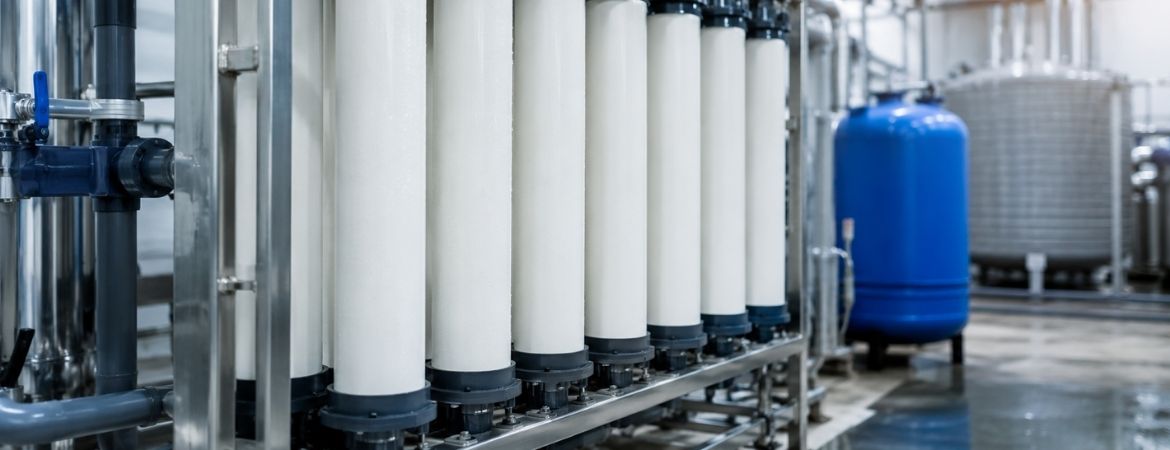
Microfiltration Systems for Suspended Solids Removal: How They Work
Suspended solids are one of the most persistent problems in industrial wastewater — fine particulates, bacteria, colloids and organic debris that cloud water and interfere with downstream treatment. Left untreated, they foul equipment, reduce process efficiency and make water unsafe for reuse or discharge. Microfiltration (MF) has become the go-to first line of defence against this problem, and understanding how it actually works helps explain why so many industries rely on it. Adimem Technology designs microfiltration membranes specifically engineered for this task, offering a practical route to cleaner, reusable water.
What Microfiltration Actually Does
Microfiltration is a pressure-driven membrane process that separates suspended particles from a liquid by forcing water through a porous membrane. The membrane’s pore size — typically between 0.1 and 10 microns — is small enough to physically block suspended solids, bacteria and larger colloidal matter, while allowing water, dissolved salts and smaller molecules to pass through freely as permeate.
Unlike chemical treatment methods that rely on coagulation or flocculation, microfiltration achieves separation purely through a physical barrier. This makes it far more predictable and easier to control, since performance depends on membrane pore size and surface area rather than dosing chemistry that can vary batch to batch.
How the Process Works, Step by Step
In a typical MF system, feed water is pumped across the membrane surface under moderate pressure, in what’s known as cross-flow filtration. As water passes through the membrane, suspended solids and larger contaminants are retained on the feed side and continuously swept along the membrane surface by the flow, rather than settling and building up. This cross-flow action limits the rate of fouling compared with simple dead-end filtration, extending the membrane’s operating life between cleaning cycles.
The retained material, known as the concentrate or reject stream, is drawn off separately for further treatment or disposal, while the clarified permeate continues downstream — either for reuse, further membrane polishing through ultrafiltration or reverse osmosis, or safe discharge.
Membrane Materials and Configurations
Microfiltration membranes are commonly made from polymers such as PVDF (polyvinylidene fluoride) or PES (polyethersulphone), chosen for their chemical resistance, mechanical strength and cleanability. These membranes are available in a range of configurations to suit different applications:
- • Spiral wound membranes offer a compact design with high surface area, well suited to clarification and hygienic processes
- • Hollow fibre membranes provide a large filtration area in a small footprint, ideal for large-volume water treatment
- • Tubular membranes handle high-solid or viscous feed streams that would quickly clog other configurations
Housings also matter for long-term operating cost. UPVC or FRP housings are typically used for lower-pressure MF applications, offering a more economical alternative to stainless steel while still allowing easy membrane replacement without disturbing the rest of the system.
Why Industries Choose Microfiltration
Because it removes suspended solids, bacteria and fine particulates without chemical addition, microfiltration is widely used as both a standalone clarification step and a pretreatment stage ahead of ultrafiltration, nanofiltration or reverse osmosis. Protecting these finer, more expensive membranes from fouling by suspended solids significantly extends their service life and reduces overall system maintenance costs.
Typical applications include municipal and industrial wastewater treatment, pretreatment for reuse systems, and clarification steps in food, beverage and pharmaceutical processing, where consistent removal of particulates and microorganisms is essential to product quality and regulatory compliance.
Choosing the Right System
Not every microfiltration system performs equally well under real operating conditions. Feed water characteristics, fouling tendency and required flow rates all influence which membrane material, configuration and housing type will deliver the best long-term performance. This is where Adimem Technology brings genuine value — with in-house manufacturing and application-led development, its microfiltration systems are built to match the specific demands of each process rather than offered as a one-size-fits-all product.
Conclusion
Microfiltration remains one of the simplest yet most effective tools for suspended solids removal, combining physical separation with low chemical dependency and dependable performance. For industries looking to safeguard downstream treatment systems, recover water for reuse, or meet discharge standards reliably, a well-designed microfiltration system is often the essential first step and Adimem Technology continues to support manufacturers with membrane solutions engineered for exactly this purpose.