

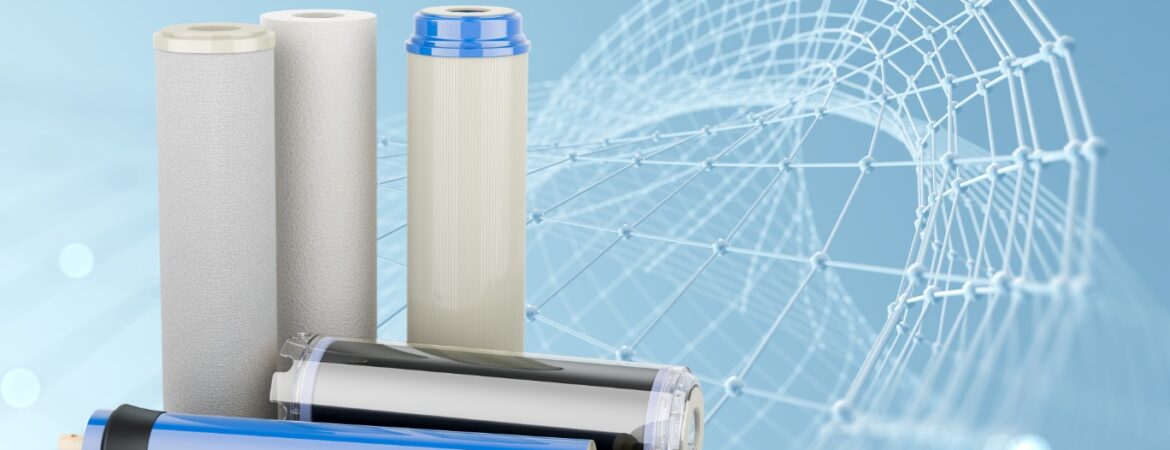
UF vs RO Membranes: Which Is Better for Water Treatment?
If you’ve spent any time evaluating water treatment systems, you’ve probably come across this debate. Ultrafiltration or reverse osmosis — which one actually delivers better results for wastewater treatment? At Adimem Technologies, this is one of the most common questions we encounter from industries trying to make the right membrane investment. The honest answer is: it depends. But that’s not a cop-out. The two technologies solve fundamentally different problems, and confusing one for the other can lead to costly mismatches in system design.
Let’s break it down practically.
What Ultrafiltration Actually Does
Ultrafiltration (UF) works by pushing water through a membrane with pores typically ranging from 0.01 to 0.1 microns. At that size, it captures suspended solids, bacteria, and larger organic molecules but dissolved salts, heavy metals, and smaller chemical compounds pass right through. This makes UF membranes highly effective for wastewater treatment applications where the primary concern is turbidity, microbial contamination, or pre-treatment before a downstream process.
Industries dealing with food and beverage effluent, textile wastewater, or municipal sewage treatment often find UF membranes well-suited to their needs. The operating pressures are lower, energy consumption is comparatively modest, and maintenance is manageable. For manufacturers in India looking at ultrafiltration membrane solutions for wastewater treatment, UF systems also tend to offer longer operational life when the feed water quality is reasonably consistent.
Where Reverse Osmosis Takes Over
Reverse osmosis (RO) operates at a fundamentally different level. RO membranes have an effective pore size close to 0.0001 microns small enough to reject dissolved salts, heavy metals, fluorides, nitrates, and a wide range of chemical contaminants. The trade-off is higher operating pressure, greater energy demand, and the need for careful pre-treatment to protect the membrane surface from fouling.
For industries where the treated water must meet strict TDS limits or be reused in sensitive processes — pharmaceuticals, electronics manufacturing, power plants — reverse osmosis membranes for water treatment are often non-negotiable. RO is also central to zero liquid discharge (ZLD) systems, where the goal is maximum water recovery with minimal effluent discharge.
Adimem Technologies works closely with industries navigating these requirements, offering reverse osmosis membrane solutions tailored to specific effluent profiles and compliance targets.
Head-to-Head: The Key Differences
The core distinction comes down to what each membrane is designed to remove. UF handles particulates and biological contaminants. RO handles dissolved solids and ionic compounds. Running RO on heavily turbid or high-TSS wastewater without adequate pre-treatment will foul the membranes quickly and drive up replacement costs. Conversely, using UF where dissolved salt rejection is required will simply not achieve the desired output quality regardless of how well the system is maintained.
Feed water characterisation is therefore the starting point for any serious membrane selection process. Before choosing between UF and RO, a detailed analysis of the wastewater stream TDS, TSS, pH, temperature, and contaminant profile is essential.
Can Both Work Together?
Frequently, yes. In many industrial wastewater treatment setups, UF and RO are deployed in sequence. UF acts as a pre-treatment stage, removing suspended solids and protecting the RO membranes from fouling. This combination improves overall system efficiency, extends RO membrane life, and reduces total cost of ownership over time.
Adimem Technologies has developed UF modules specifically designed to integrate with downstream RO systems a reflection of how modern treatment architecture increasingly favours hybrid membrane configurations for superior results.
So, Which Is Better?
Neither technology is universally superior. UF is better when the challenge is physical and biological contamination. RO is better when dissolved solids and chemical rejection are the priority. The right choice or the right combination depends entirely on what is in your wastewater and what your treated water needs to achieve.
Getting that assessment correct from the start saves a lot of time, cost and operational headache down the line.